
1. Strengthening strategic health purchasing in Southeast Asia

Organisation
Southeast Asia Regional Collaborative for Health
Funder(s)
The Gates Foundation
Dates
January 2022 – ongoing
Role
Project coordinator, researcher, consultant
Summary
Between 2022-2024, I acted as coordinator for the Southeast Asia Regional Collaborative for Health, a Gates Foundation-funded initiative seeking to strengthen univeral health coverage. I led a regional team on desk research and stakeholder engagement to study the landscape of health financing/strategic purchasing in Southeast Asia, producing a multi-country policy report and online information repository. I also managed multiple stakeholder relationships (funders, research groups, policymakers, senior advisors) and organised events to raise knowledge & capacity for strategic purchasing. I continue to regularly consult for SEARCH on events and publications.
Selected outputs
Advancing strategic health purchasing for primary healthcare in Southeast Asia: A comparative policy analysis of Indonesia, the Philippines, Thailand and Vietnam (July 2026). Journal article.
Strengthening strategic health purchasing in Southeast Asia: Progress, opportunities and recommendations (October 2023). Policy report.
Challenges and opportunities for regional collaboration for strategic purchasing in Southeast Asia (May 2023). Commentary.
2. Analysing the cost-effectiveness of HPV vaccinations
Organisation
World Health Organization (Europe)
Dates
July 2024 – ongoing
Role
Consultant
Summary
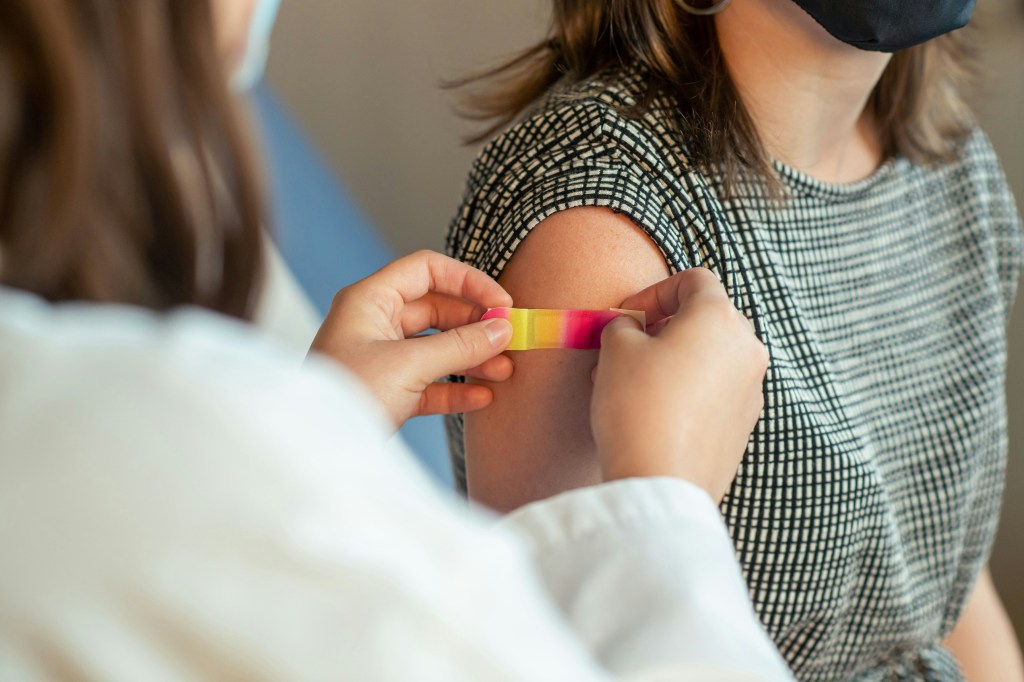
I consulted for the WHO Europe Office on a cost-effectiveness analysis of Human Papillomavirus (HPV) vaccinations for adolescent girls in Belarus. HPV vaccinations are essential to preventing persistent infections and cervical cancers; through a WHO-approved PRIME cost-effectiveness model, I investigated how investing in a vaccination programme is expected to reduce morbidity, mortality and healthcare costs in the future.
3. Identifying data sharing barriers and enablers for healthcare AI

Organisation
Saw Swee Hock School of Public Health
Funder(s)
Association for Pacific Rim Universities (APRU) / United Nations Economic and Social Commission for Asia and the Pacific (UN ESCAP) / Google.org
Project dates
July 2022 – November 2023
Role
Researcher
Summary
I worked with a multi-country team to support the Thai government in bolstering its healthcare AI capabilities for social good. I co-led a systematic review on barriers to data sharing for healthcare AI in LMICs; my team tested the relevance of our findings to the Thai context by interviewing healthcare professionals, regulators and policymakers. Our research culminated in a set of policy recommendations to strengthen Thailand’s health data sharing practices & governance, with our findings workshopped with government stakeholders and presented at various regional and international events.
Selected outputs
Challenges and opportunities for data sharing related to Artificial Intelligence (AI) tools in healthcare: A systematic review across low- and middle-income countries (LMICs) and a case study from Thailand (February 2025). Journal article.
Data sharing barriers and enablers for healthcare Artificial Intelligence (AI) in Low- and Middle-income countries (May 2023). Conference abstract / presentation.
4. Exploring civil society perspectives on Universal Health Coverage

Organisation
Saw Swee Hock School of Public Health
/ Civil Society Engagement Mechanism (CSEM) for UHC2030
Funder(s)
UHC2030
Dates
April – December 2022
Role
Co-lead, facilitator, researcher
Summary
In 2022, I led a consultation with Singaporean civil society members to identify gaps in Universal Health Coverage (UHC) in the country. I led recruitment, focusing on underrepresented groups (e.g. gender & sexual minorities, youths) and health & social care professionals. I then convened and facilitated two Focus Group Discussions, jointly analysed the findings to produce a final report and participated in various dissemination initiatives. Our consultation contributed to a broader global report on the state of UHC by the Civil Society Engagement Mechanism of UHC2030.
Selected outputs
Civil society consultation on Universal Health Coverage (UHC) in Singapore (July 2022). Report.
Making universal health coverage a reality for more people in Singapore (December 2022). News commentary.
5. Producing a health equity measurement framework & analysing data collection barriers

Organisation
Saw Swee Hock School of Public Health
Funder(s)
The Equity Initiative (China Medical Board Foundation)
Dates
January 2022 – ongoing
Role
Project manager, researcher
Summary
I collaborated with a regional team from Singapore, Vietnam, Cambodia and Thailand to: 1) identify indicators relevant to the measurement of health equity across health systems; and 2) identify data gaps and challenges in Southeast Asia. I led an in-depth literature review to develop a health equity conceptual framework and a list of 196 indicators relevant to measuring health equity (both within healthcare systems and relating to broader determinants of health). I also worked on a data availability assessment for the ASEAN region and supported regional partners on stakeholder interviews to understand specific data gaps in Thailand, Cambodia and Vietnam.
Selected outputs
Developing an ideal Health Equity Index: Characteristics, challenges and perspectives from three Southeast Asian countries (April 2026). Journal article.
Measuring health equity in the ASEAN region: conceptual framework and assessment of data availability (December 2023). Journal article.
Measuring health equity in the ASEAN region: conceptual framework and assessment of data availability (May 2023). Conference abstract/presentation.
6. Researching ethical issues in embryo research and assisted reproductive technologies

Organisation
Centre for Biomedical Ethics
Funder(s)
National Medical Research Council, Ministry of Health (Singapore)
Dates
May 2021 – July 2022
Role
Researcher
Summary
I supported a range of projects on reproductive ethics & policy at the Centre for Biomedical Ethics, National University of Singapore.
Assisted reproductive technologies: I led a research project on popular narratives on women who engage in egg freezing. My research was presented at the 16th World Congress on Bioethics (July 2022) and aimed to support ongoing policy debates in Singapore on the legalisation of elective egg freezing.
Embryo research: I collaborated with a team of bioethicists and clinician-scientists to examine the ethical implications of embryo research. Our team published an article in the Journal of Medical Ethics, arguing that research involving embryos should not be unduly constrained by decision-makers and that distinctions should be drawn between different kinds of embryo research (“future person” vs. “non-future person”).
Selected outputs
Empowered, exploited or selfish? The social construction and ethical implications of narratives on egg freezing (July 2022). Presentation.
Two kinds of embryo research: four case examples (May 2022). Journal article.

